
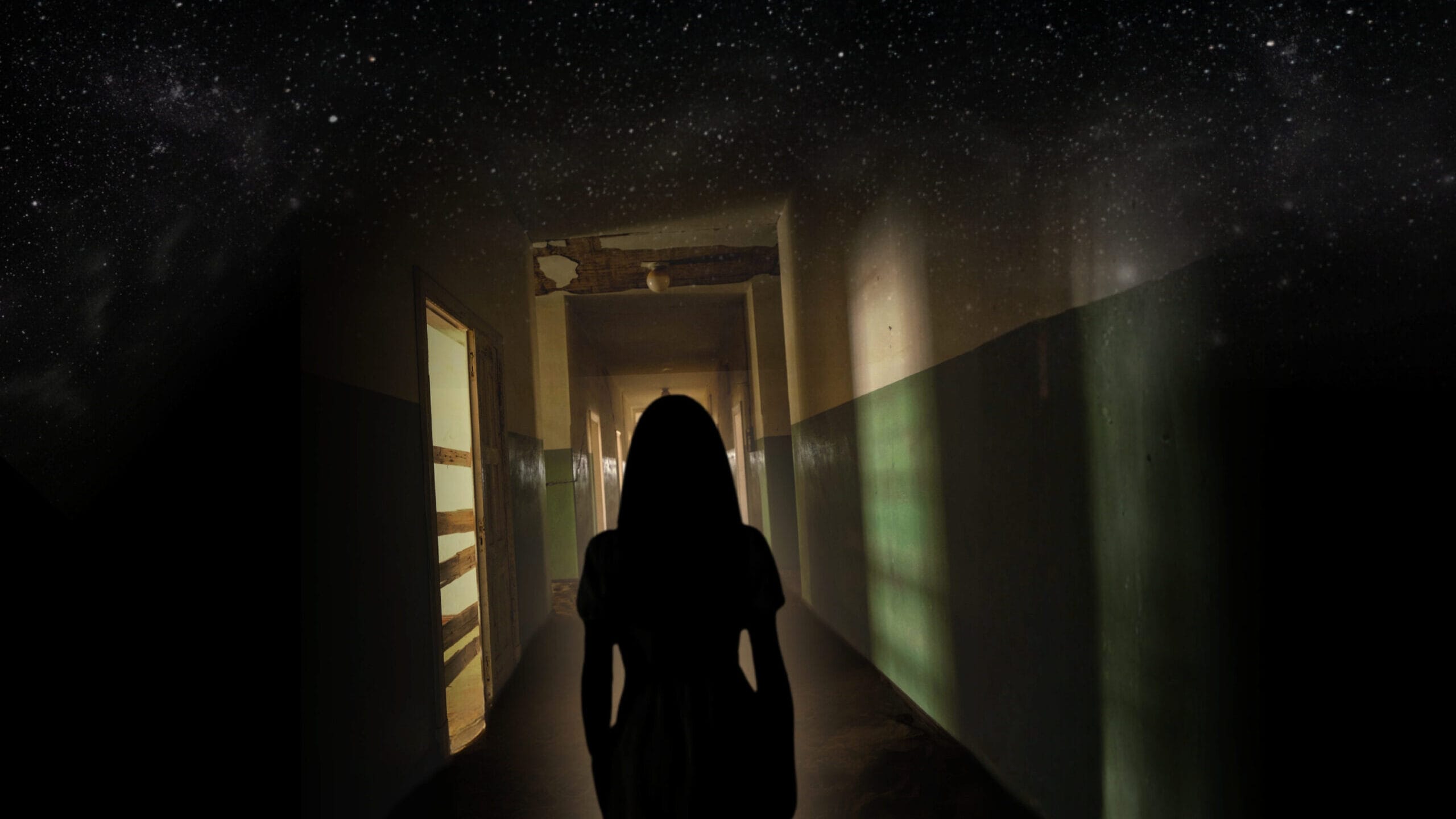
“You can see me. You can hear me. And feel me. Does it feel real? Then it is.”
1625. Shill talks to people that aren’t there. She has lived in Bedlam since she was a child, and spends her days with Robert, the hospital’s keeper, who feeds her with hope – to keep the ever-present hunger at bay. But change is coming, the King wants to revolutionise the hospital and after Bedlam’s first doctor is appointed, plans unfurl to open the hospital doors to the paying public.
2022. Aaron is suicidal. He knows he needs help and plans to admit himself to a local psychiatric treatment facility. His Mum, Tracey, has concerns as people tend to come out worse than they went in. But Aaron is adamant that this is what he needs to get better.
Connected by the thread of their experience, Aaron and Shill meet. Yes, they both know it doesn’t make sense. But somehow, it feels safe. Certainly safer than their reality.
Inspired by true accounts, Bedlam brings together two young people from different centuries whose lives become intertwined in a compelling and deeply affecting story that draws unsettling parallels between past and present. Exploring mental illness and institutional failure, the play poses the uncomfortable question of how far we have really progressed over the past 400 years in our attitudes towards, and treatment of, some of the most vulnerable members of our society.
-
Running time
90 minutes (no interval) -
Age guidance
16+ -
Content warnings
-
Discounts
Concessions available
Pay What You Can Tuesdays
-
Relaxed performance
The Company
-
Peter Imms
Writer
Peter Imms
Writer
Peter is an award-winning playwright from the West Midlands.
After completing the Mercury Theatre Playwright’s Programme in 2024, Peter’s play Bedlam was shortlisted for the Peter Schaffer NT Commission, longlisted for the George Devine Award, and was part of his winning application for the Adopt a Playwright Award 2026. He has since gone on to the Royal Court’s Writer’s Group and was shortlisted for the Midlands Writers Award and Theatre 503’s 503Five.
Peter’s play Section 2 had a run at the Bunker Theatre and was shortlisted for the New Diorama UNTAPPED Award, before he adapted it into a short film, winning Best Script at the Monaco International Film Festival 2024.
He has also had his writing workshopped at both the Almeida Theatre and the National Theatre Studio. He is currently working on a new play as part of his award win, which will receive a staged reading in March 2027.
Book your tickets
Event Instance Listings
-
Wed 21 Apr 2027
7pm
-
Thu 22 Apr 2027
7pm
-
Fri 23 Apr 2027
6.30pm
-
Sat 24 Apr 2027
6.30pm
-
Mon 26 Apr 2027
7pm
-
Tue 27 Apr 2027
7pm
-
Wed 28 Apr 2027
7pm
-
Thu 29 Apr 2027
7pm
-
Fri 30 Apr 2027
6.30pm
-
Sat 1 May 2027
3pm
-
Sat 1 May 2027
6.30pm
-
Mon 3 May 2027
7pm
-
Tue 4 May 2027
7pm
-
Wed 5 May 2027
7pm
-
Thu 6 May 2027
7pm
-
Fri 7 May 2027
6.30pm
-
Sat 8 May 2027
3pm
Relaxed performance
-
Relaxed performance
-
-
Sat 8 May 2027
6.30pm
-
Mon 10 May 2027
7pm
-
Tue 11 May 2027
7pm
-
Wed 12 May 2027
7pm
-
Thu 13 May 2027
7pm
-
Fri 14 May 2027
6.30pm
-
Sat 15 May 2027
3pm
-
Sat 15 May 2027
6.30pm